12 Best Handwritten Aesthetic Fonts in 2026
Handwritten Aesthetic Fonts span orderly monoline scripts, textured brush lettering, and elaborate signature forms, with differences in slant, joins, stroke contrast, and flourishes. Together, they cover logos, invitations, product labels, posters, headings, and other display-led applications where the lettering carries much of the visual personality.
Looking for more aesthetic fonts? Browse our complete Aesthetic Fonts collection to compare modern, elegant, bold, vintage, and retro aesthetic styles.
Handwritten Aesthetic Fonts: Clean Connected Scripts
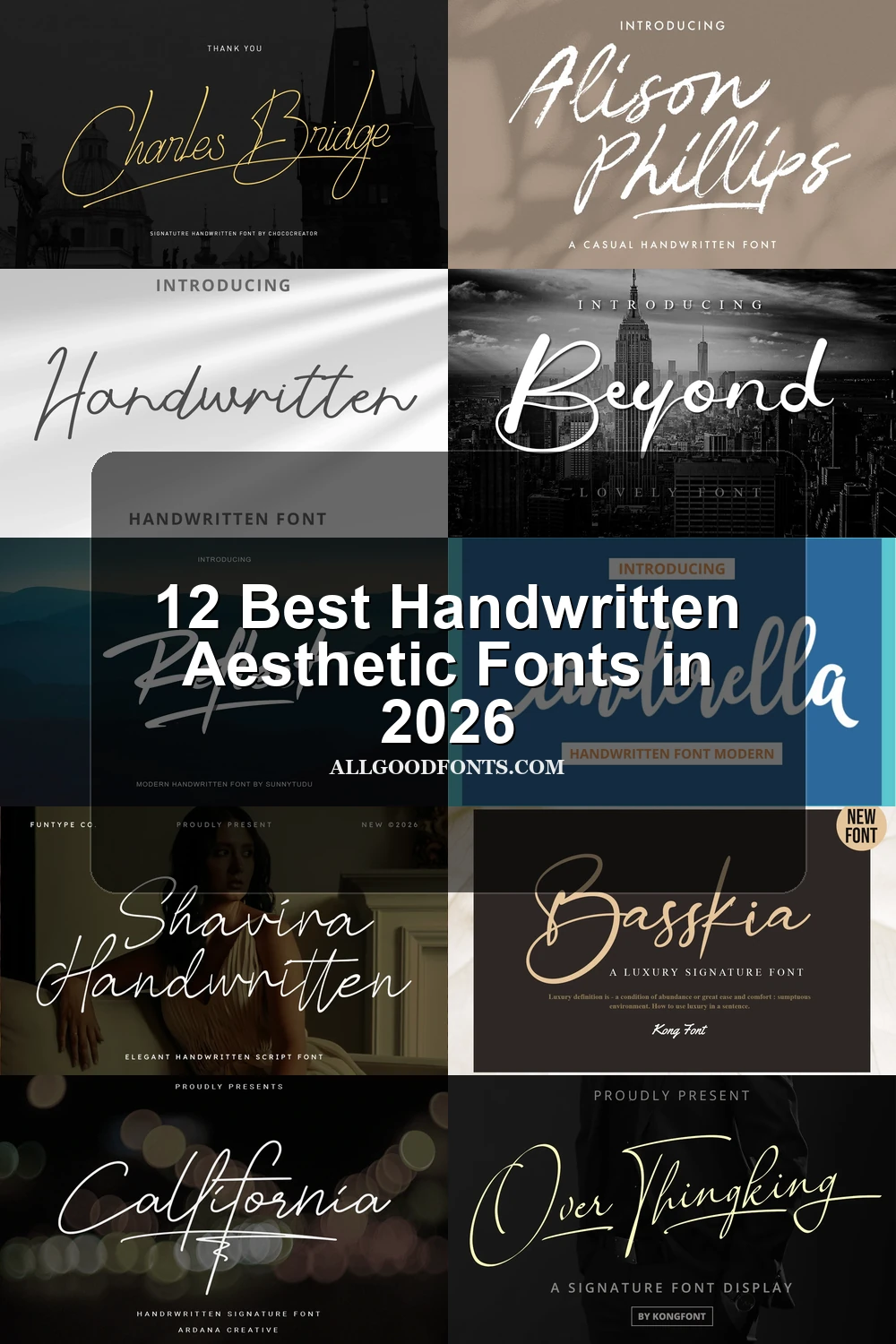
These Handwritten Aesthetic Fonts share connected, rounded strokes and controlled movement, making them more readable than brush or flourished scripts while still retaining a personal handwritten flow.
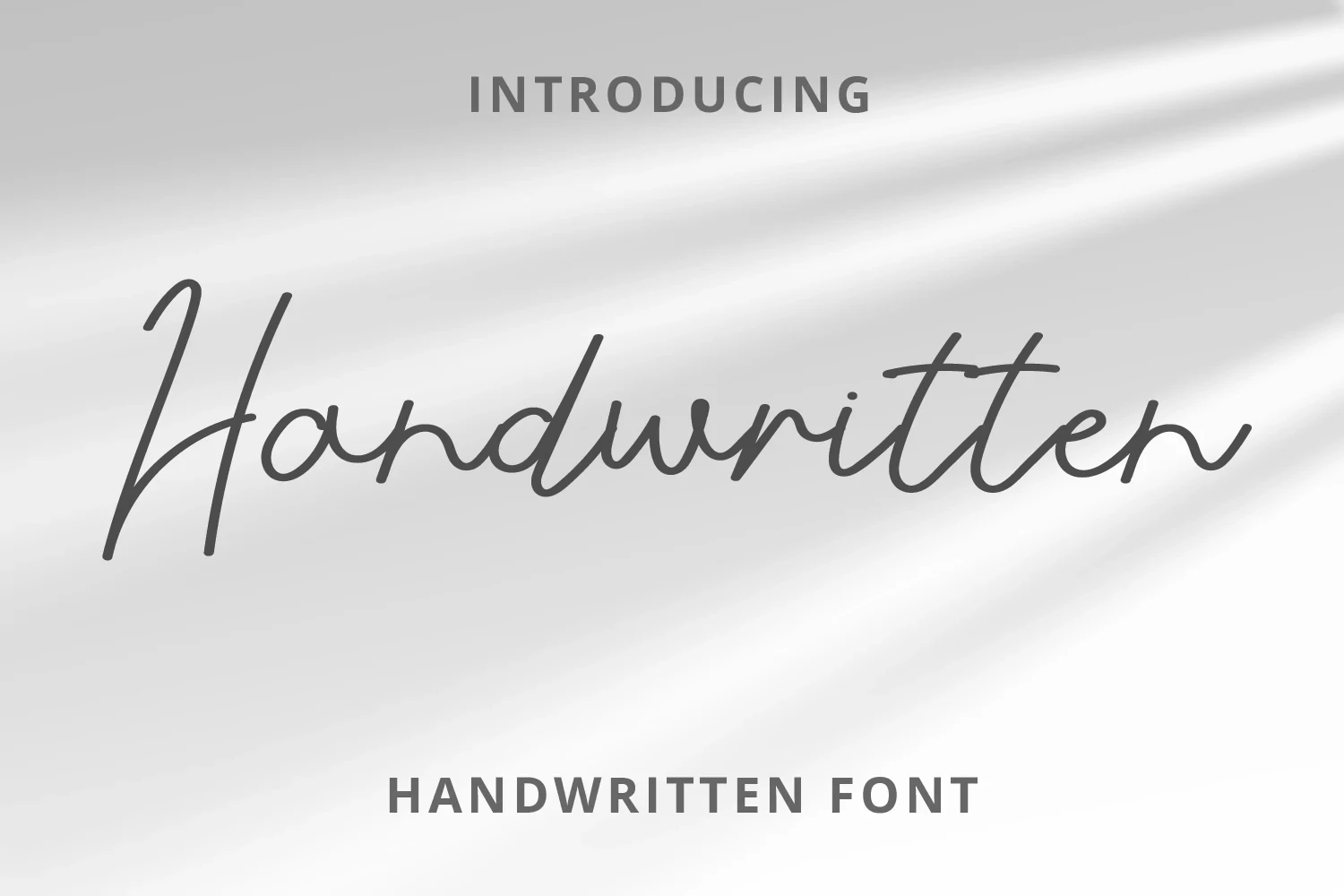
Handwritten Font
Best For: logos, casual designs
Handwritten Font uses approachable monoline cursive, rounded terminals, and a slight rightward lean. It gives Handwritten Aesthetic Fonts a casual, flowing profile that reads clearly in display-sized logos and titles, although its interconnected strokes become harder to parse when reduced.
Beyond Font
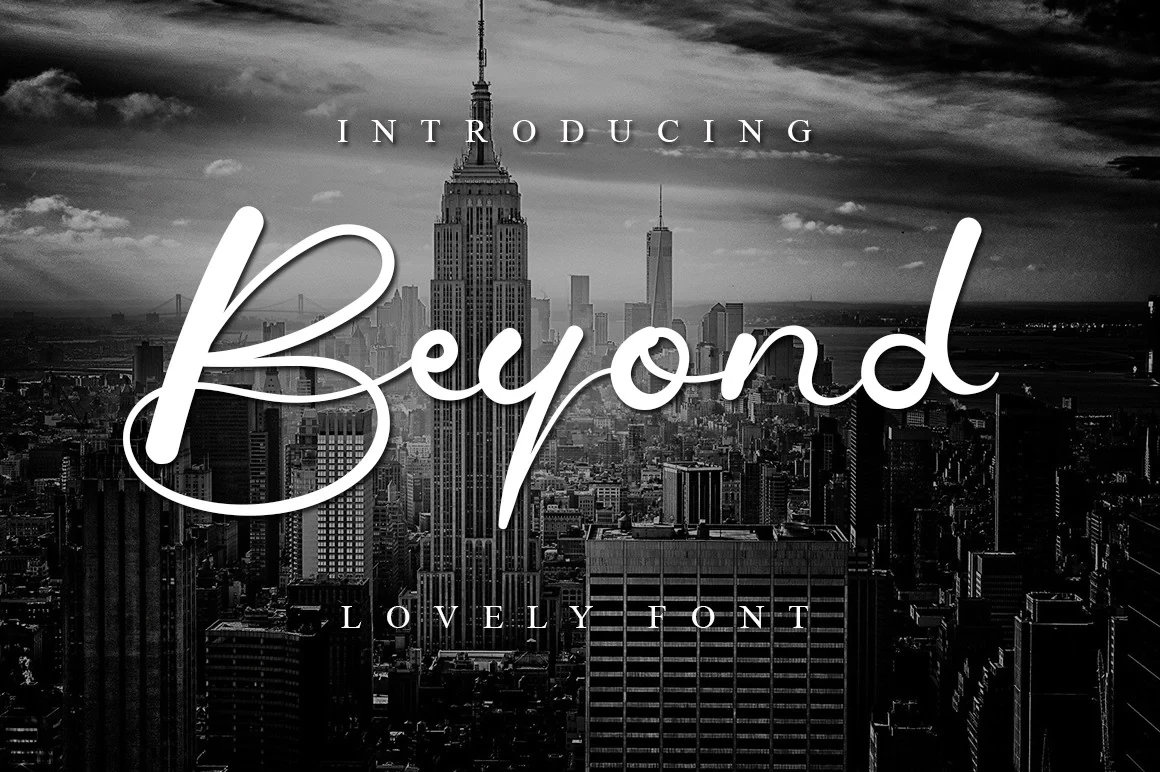
Best For: display text, modern designs, elegant designs
Beyond Font suits headline-led layouts where the lettering needs to become a personal focal point. Its connected monoline curves and pronounced loops in both ascenders and descenders create distinctive movement without heavy stroke contrast. Those looping joins remain clearest at display scale, while very small settings can blur the relationships between letters.
Shavira Handwritten Font
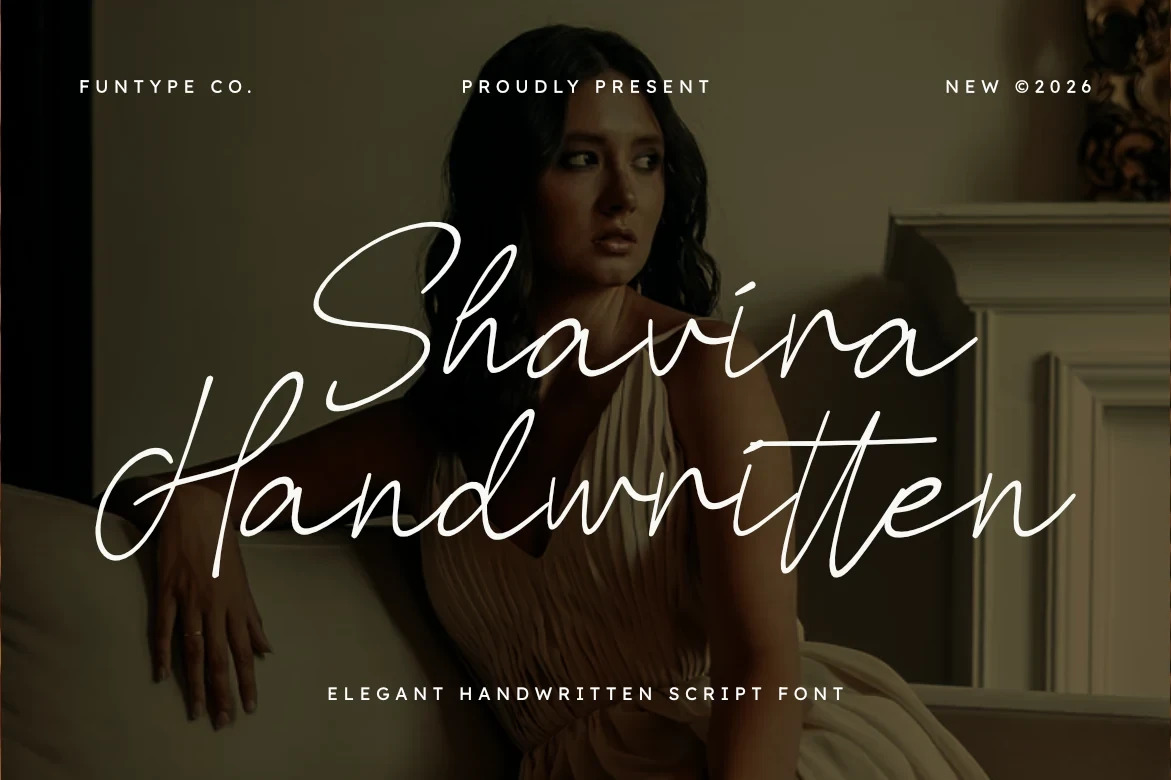
Best For: logos, branding, invitations, personal branding
Shavira Handwritten Font works well for names, invitations, and personal branding because its monoline connected forms follow a controlled right-leaning axis with rounded terminals. For Handwritten Aesthetic Fonts, it offers a measured handwritten flow, though the joined letters become difficult to decipher at compact sizes.
Handwritten Font
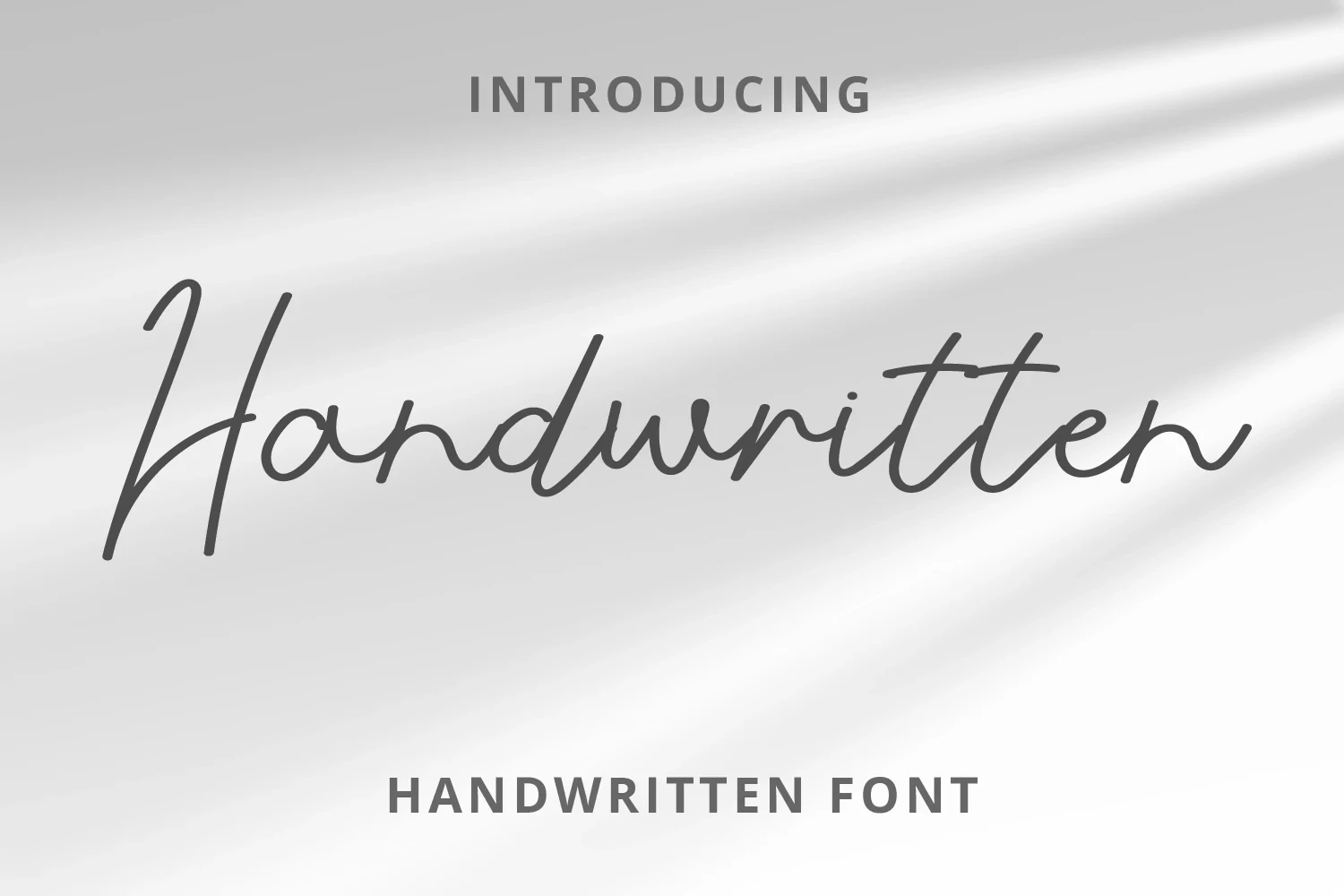
Best For: product labels, casual designs, clean designs
Handwritten Font uses a medium-weight, uniform monoline construction with rounded terminals and a slight rightward slant. Its consistent stroke gives it stronger display readability than contrast-heavy scripts, making it useful for product labels and titles, though the connected structure still limits very small applications.
Cinderella Font
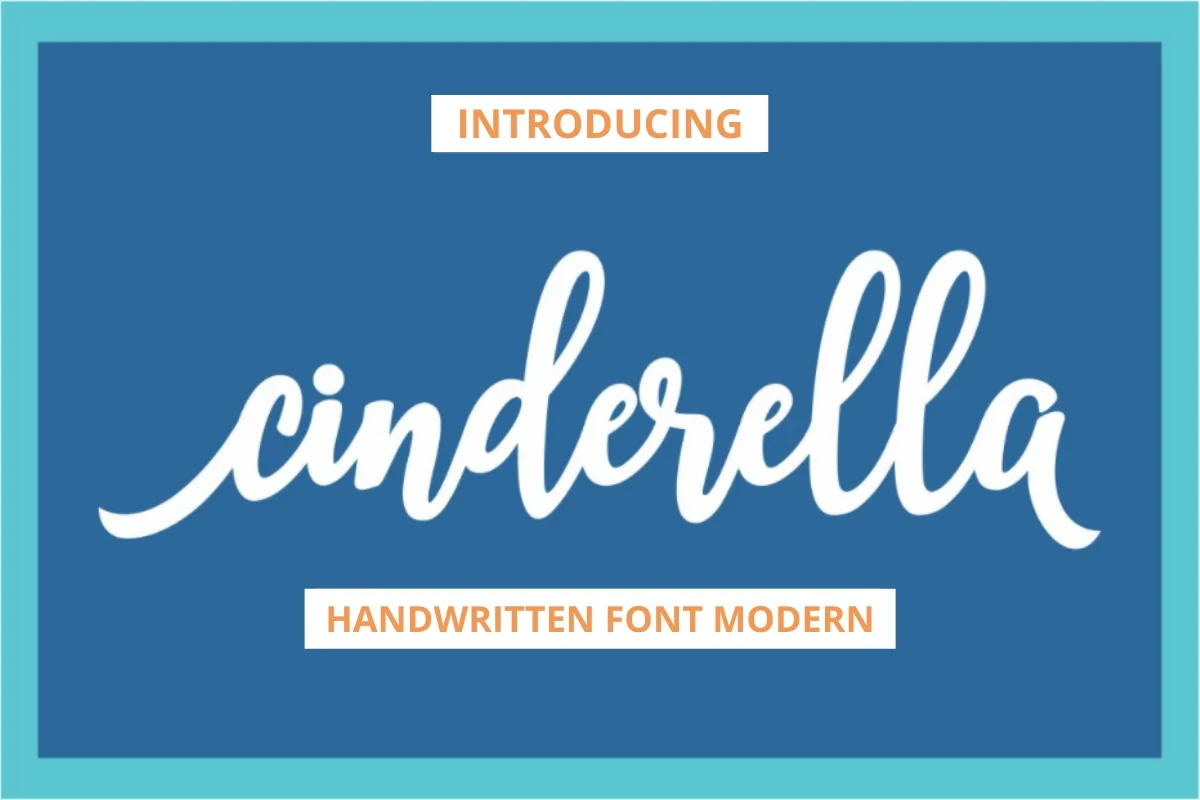
Best For: modern designs, clean designs, bold designs
Cinderella Font takes Handwritten Aesthetic Fonts in a more upright direction, replacing the typical rightward axis with stable orientation, connected cursive strokes, rounded terminals, and a consistent monoline weight. That structure supports readable headings and branding at medium-to-large sizes while preserving an informal handwritten character.
Brush-Driven Handwritten Styles
Brush-driven styles rely on textured marks, variable widths, or bold contrast rather than uniform pen strokes, giving headings a tactile, energetic presence that needs generous sizing.
Mueband Font
Best For: display text, bold designs, classic designs
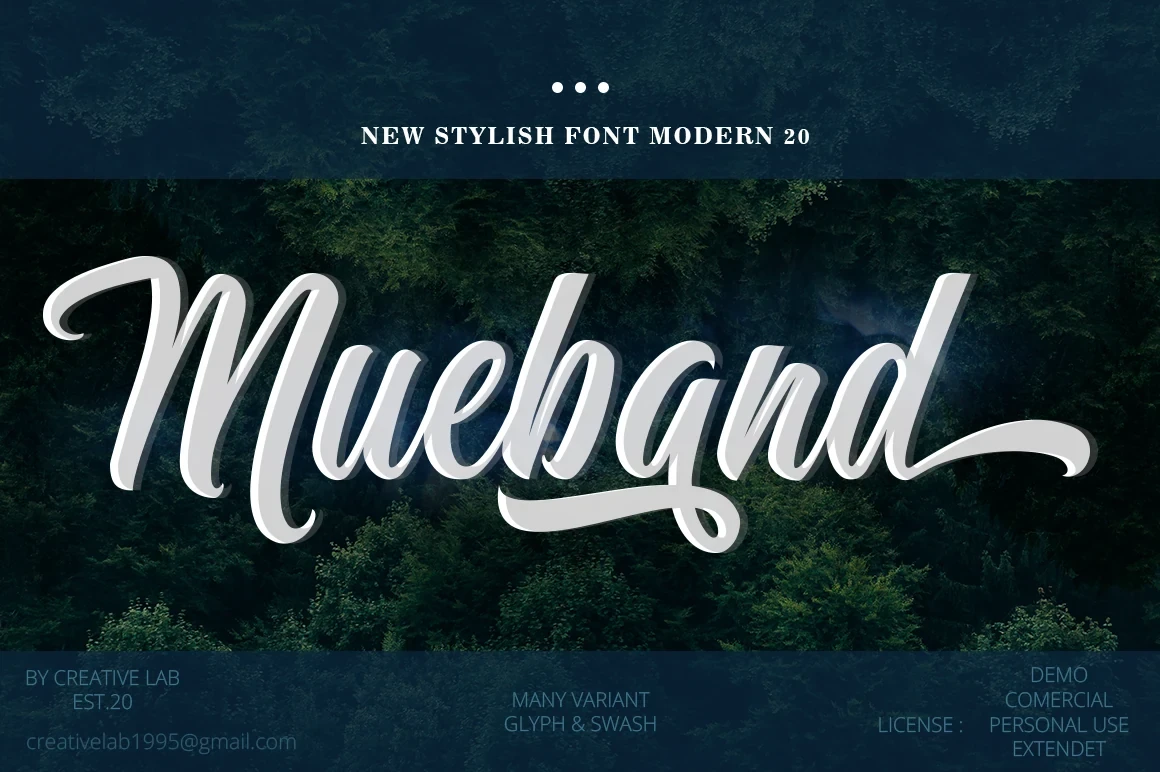
Mueband Font brings a heavy brush-script construction, strong thick-and-thin contrast, and a sweeping swash on the final letter. Its bold weight protects headline legibility in posters, headers, and branding, but the elaborate ending makes it unsuitable for body copy or compact text.
Reflect Handwritten Font
Best For: display text, modern designs, elegant designs
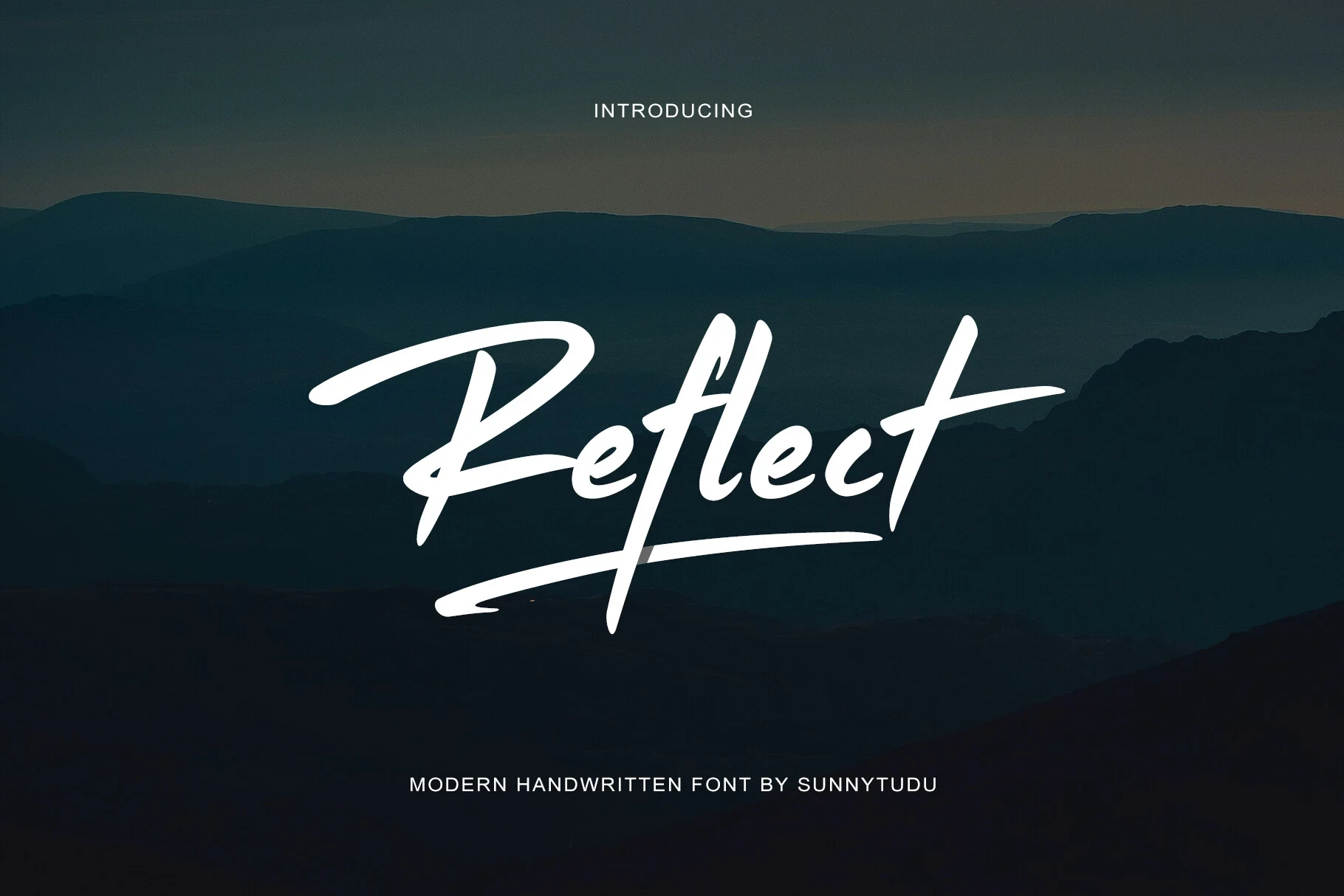
Reflect Handwritten Font combines high-contrast cursive with a long horizontal underscoring swash. That baseline gesture anchors title treatments and adds directional energy, while varying stroke widths and the underline require generous display scale rather than small text or extended reading.
Alison Phillips Casual Handwritten Font
Best For: display text, personal branding, casual designs
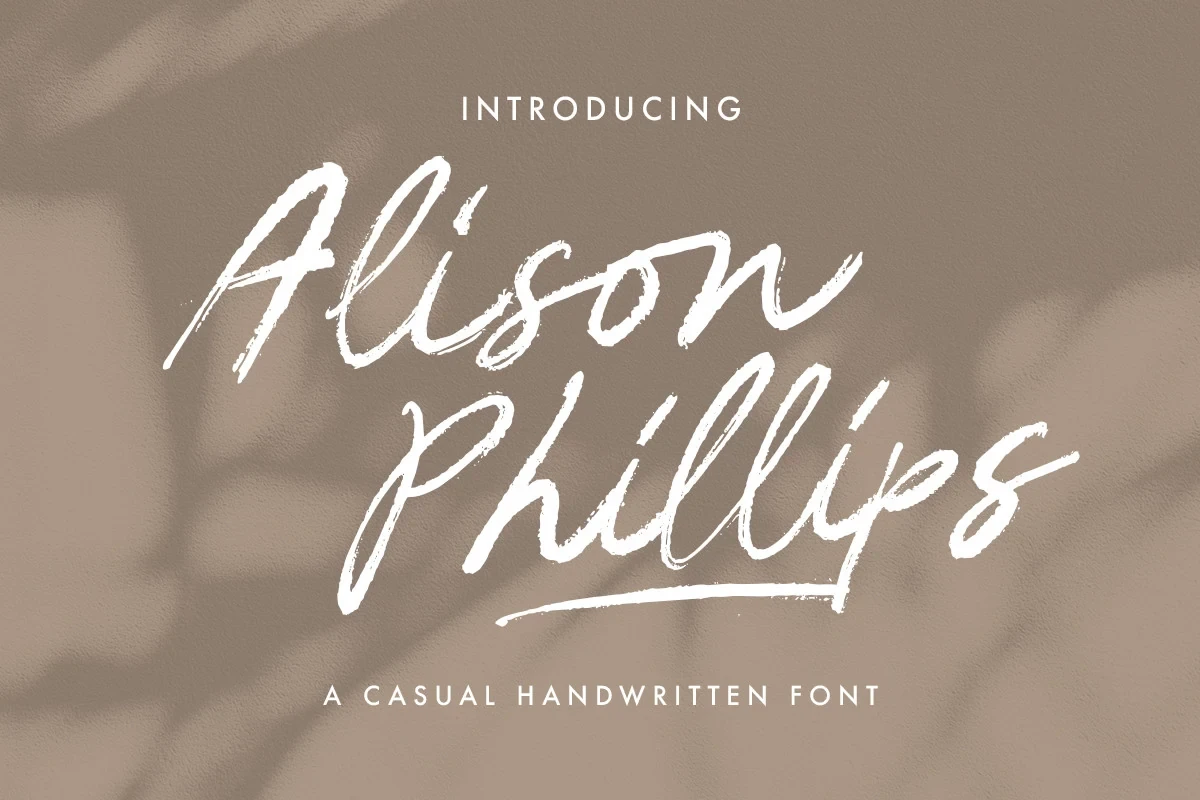
Alison Phillips Casual Handwritten Font uses disconnected dry-brush lettering instead of continuous cursive joins. Variable stroke width and visible brush texture create a casual, artisanal impression for large headings, personal branding, and similar display work, but the broken construction and texture reduce clarity at small sizes.
Flourished Signature Scripts
Flourished signature scripts emphasize irregular baselines, steep slants, sweeping tails, and ornamental openings, prioritizing an autograph-like impression over quick reading or compact use.
Callifornia Font
Best For: display text, elegant designs, decorative designs
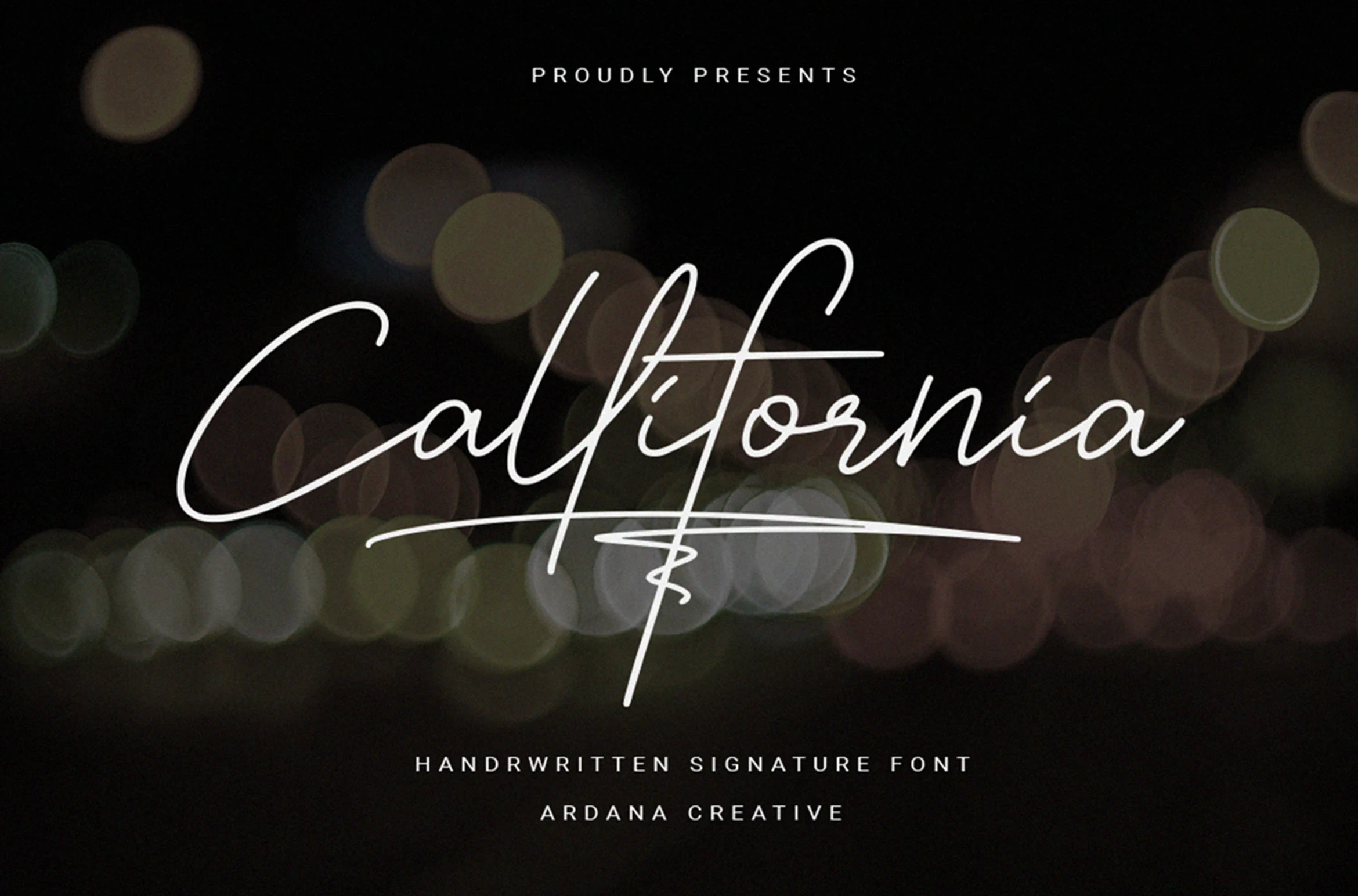
Callifornia Font builds its identity through a pronounced slant, connected lettering, elongated tails, and extensive decorative swashes. The extra movement creates an elegant branding signature for large display text; smaller headings lose clarity. Its PUA-encoded characters provide access to the additional glyphs and swashes.
Basskia Font
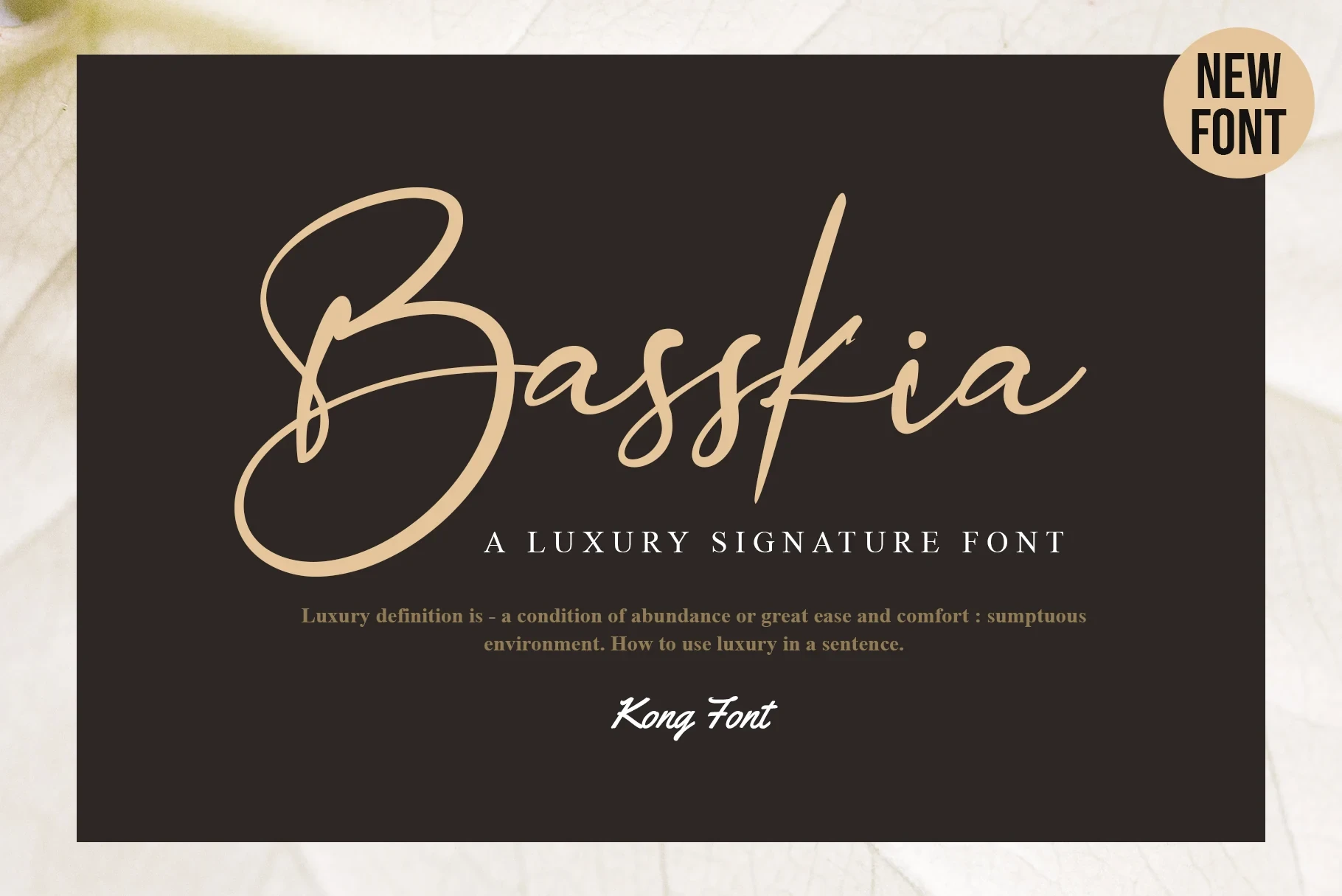
Best For: creative projects, display text, modern designs
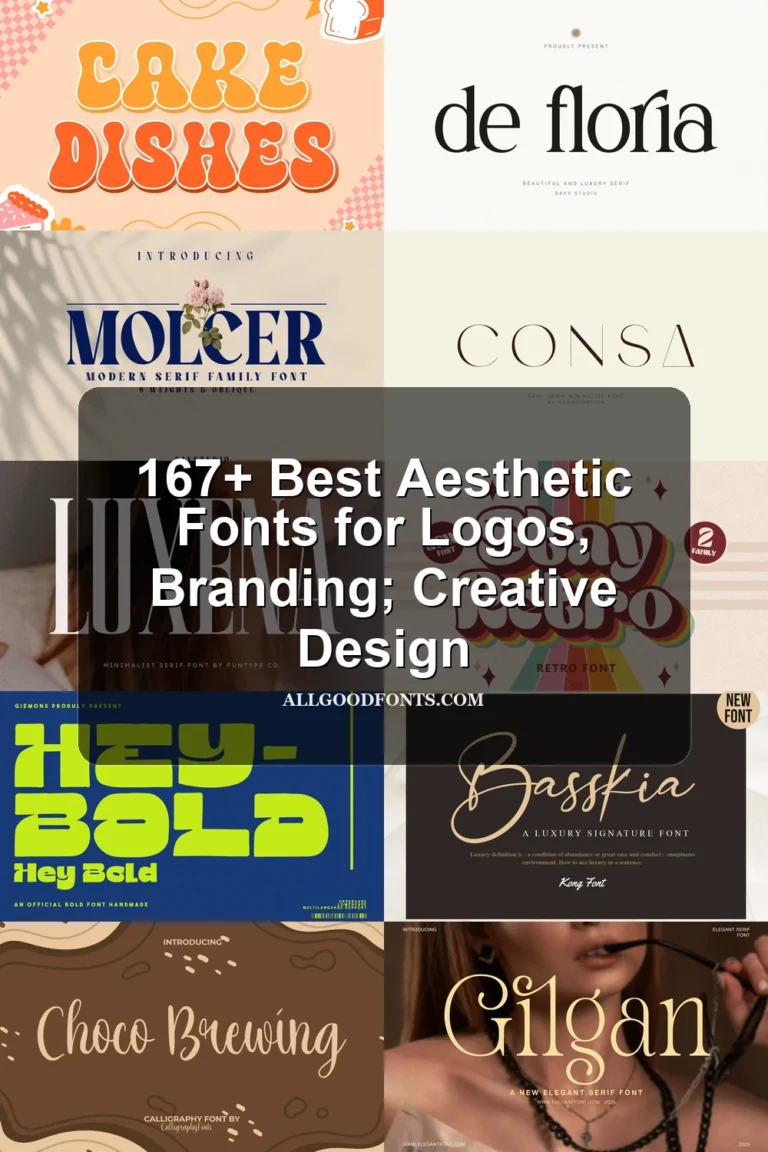
Basskia Font creates a signature effect through a visibly varying baseline, connected cursive, high stroke contrast, and sweeping swashes on its leading characters. The irregular movement suits large display work, while those flourishes and contrast slow reading when the lettering is scaled down.
Over Thingking Font
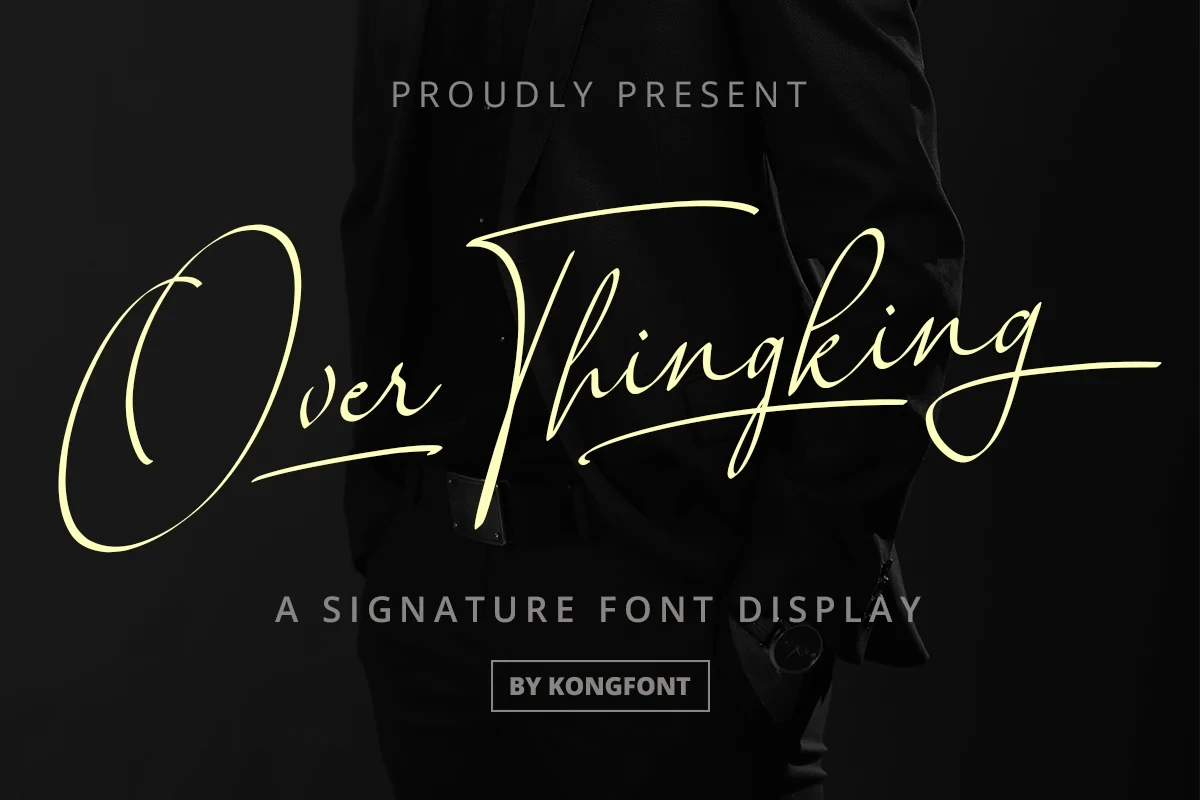
Best For: modern designs, elegant designs, playful designs
Over Thingking Font combines varied letter sizing, a steep slant, high contrast, and elongated sweeping swashes to form a theatrical title silhouette. The intricate connections suit large headers and display compositions, but they make compact text difficult to read and reduce its usefulness for smaller supporting copy.
Charles Bridge Signature Handwritten Font
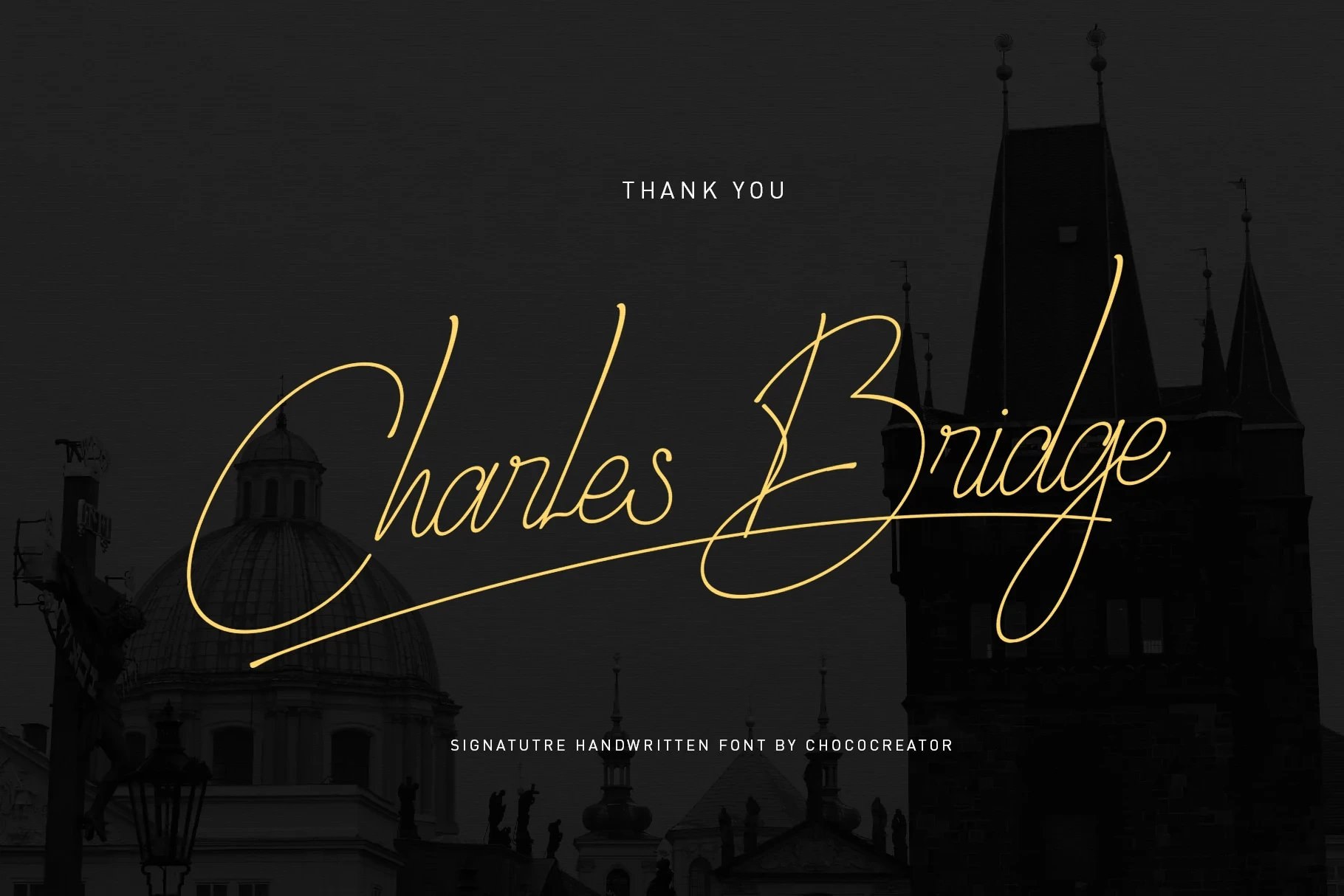
Best For: branding, invitations, personal branding, display text
Charles Bridge Signature Handwritten Font uses a light monoline structure, irregular baseline, pronounced rightward lean, and extended initial and terminal flourishes. Its thin loops suit large invitation, branding, and signature treatments, but complex joins and light strokes quickly lose definition when reduced.
How to Choose the Right Font
Choose by construction first: monoline connected scripts generally offer steadier readability, while brush textures and high contrast need more scale. Upright or medium-weight options can support headings and labels, whereas steep slants, irregular baselines, and flourishes are best reserved for logos, invitations, and signature-led display work. Test every choice at its final size.