16 Best Signature Handwritten Fonts in 2026
This collection moves from slender, contemporary joins to rhythmic display scripts, monolinear swashes, and more structured high-contrast lettering. These Signature Handwritten Fonts are best used for names, logos, packaging, invitations, headlines, and other short phrases where construction and readability can be judged at display size.
Looking for more handwritten fonts? Browse our complete Handwritten Fonts collection to compare modern, bold, wedding, logo-friendly, and Cricut-ready handwritten styles.

Signature Handwritten Fonts: Light Contemporary Flow
These Signature Handwritten Fonts share clean, connected movement and a lighter contemporary feel. Compared with the other groups, they keep flourishes controlled and remain more dependable for modern headings, names, and compact branding.
Sevilla Font

Best For: modern designs, clean designs, elegant designs
Sevilla Font uses refined slender strokes and softly joined letters to create a light, contemporary signature. Among Signature Handwritten Fonts, it is best reserved for names, headings, and short display phrases where its delicate shapes stay clear.
Daisy Font
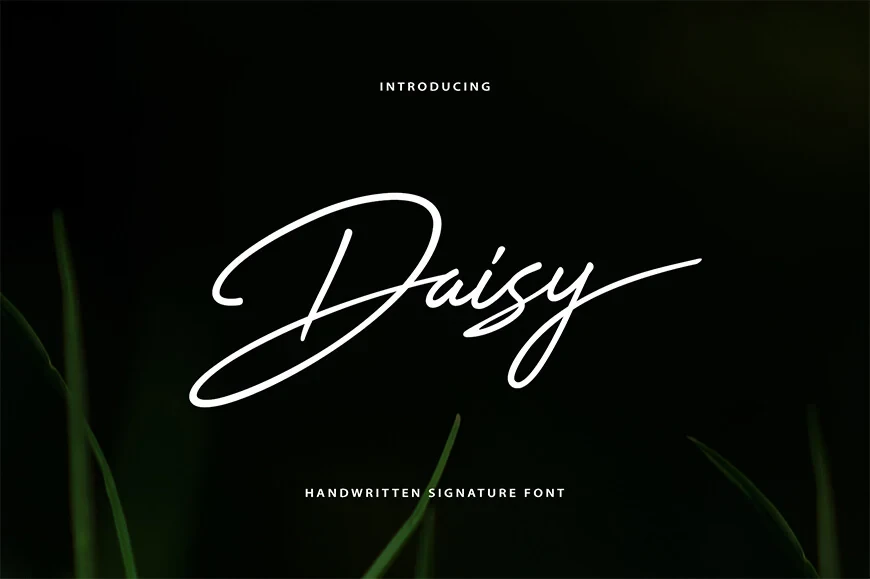
Best For: logos, display text, modern designs
Daisy Font combines connected movement with distinctive display letterforms, giving short brand lines and headings more visual character. As Signature Handwritten Fonts go, it is easier to assess in a logo or brief phrase than in extended text.
Charles Bridge Signature Handwritten Font

Best For: branding, invitations, display text
Charles Bridge Signature Handwritten Font brings clean contemporary construction to connected lettering, allowing it to move between branding and invitations. Like many Signature Handwritten Fonts, its strongest readability appears in names, headings, and other short display phrases.
Philosophe Signature Font

Best For: display text, modern designs, clean designs
Philosophe Signature Font keeps its connected movement clean and contemporary, making it suitable for modern display treatments. Use it for names, short headings, and compact design phrases; its letterforms are not intended to carry paragraphs.
Thermosd Handwritten Signature Font

Best For: display text, modern designs, clean designs
Thermosd Handwritten Signature Font balances connected handwritten movement with clean contemporary construction. Its flowing forms are most useful in modern headings and short display phrases, where the joins remain legible and the lettering can act as a clear focal element.
Expressive Connected Display Scripts
This group emphasizes connected display forms, visible stroke rhythm, and expressive letter shapes. Its scripts make a stronger visual statement than the lighter contemporary category, so short phrases work better than sustained reading.
Blessed Signature Font

Best For: branding, social media graphics, display text
For branding or social media graphics, Blessed Signature Font offers a clear stroke rhythm within its connected script. That measured movement distinguishes it from looser handwritten styles, though its display orientation makes brief headings and compact phrases the safer choice.
Quinsky Font

Best For: personal branding, branding, display text
Quinsky Font gives connected lettering a strongly distinctive display presence, making the name or brand phrase the main visual focus. Its flowing joins and defined letter shapes suit personal branding particularly well, provided the wording remains short.
Skinny Signature Font

Best For: product labels, display text, expressive designs
Skinny Signature Font is built for connected display lettering rather than general reading. Its flowing construction fits product labels and expressive headlines, where a short word or phrase can carry the design without requiring paragraph-length legibility.
Handgoals Font

Best For: branding, packaging, social media graphics
Handgoals Font pairs connected movement with a clear stroke rhythm, giving branded packaging graphics a readable focal point. Its display letters can carry product names and social artwork, but the evidence does not support sustained text use.
Hello World Font

Best For: T-shirts, logos, branding, packaging
Hello World Font uses flowing connected letters for highly visible treatments such as T-shirts, logos, and packaging. Test the complete phrase rather than isolated characters, since the display forms and their relationships provide much of the impact.
Charlotte Signature Font

Best For: logos, packaging, social media graphics
Charlotte Signature Font uses light connected strokes with a period-inspired character, offering a nostalgic alternative to more contemporary scripts. Its display readability suits logos, packaging, and social graphics where the historical tone remains visible without competing with lengthy copy.
Adhittama Font

Best For: display text, elegant designs, headlines
Adhittama Font centers on flowing connected movement and a pronounced display-letter focus. It works best when a headline or expressive design phrase can remain brief, allowing its joined forms and stroke rhythm to support the composition without overloading the wording.
Blackline Font

Best For: display text, elegant designs, high-end designs
Blackline Font adds built-in ligatures to light connected strokes, allowing certain combinations to join more naturally. That feature can enrich short display lettering and high-end marks, but check each phrase carefully so the additional joining does not reduce clarity.
Stylized Signature Systems
These stylized systems rely on stronger individual construction choices: monolinear curves, slanted axes, swashes, contrast, or supporting sans-serif pairings. They reward large-scale presentation and careful phrase-by-phrase testing.
William Jameson Font

Best For: product labels, clean designs, elegant designs, decorative designs
William Jameson Font combines monolinear connected letters, a pronounced rhythmic slant, and extended baseline swashes. Those flourishes make it fluid at large sizes but less legible when reduced, so use it for signatures, invitations, or branding headers.
Signatesa Font

Best For: logos, branding, personal branding
Signatesa Font is defined by a right-leaning axis and continuous monolinear curves, giving its lettering a clear directional flow. For Signature Handwritten Fonts, this is a large-scale option: choose it for logos, headings, or personal branding rather than body text.
Orchidia Font
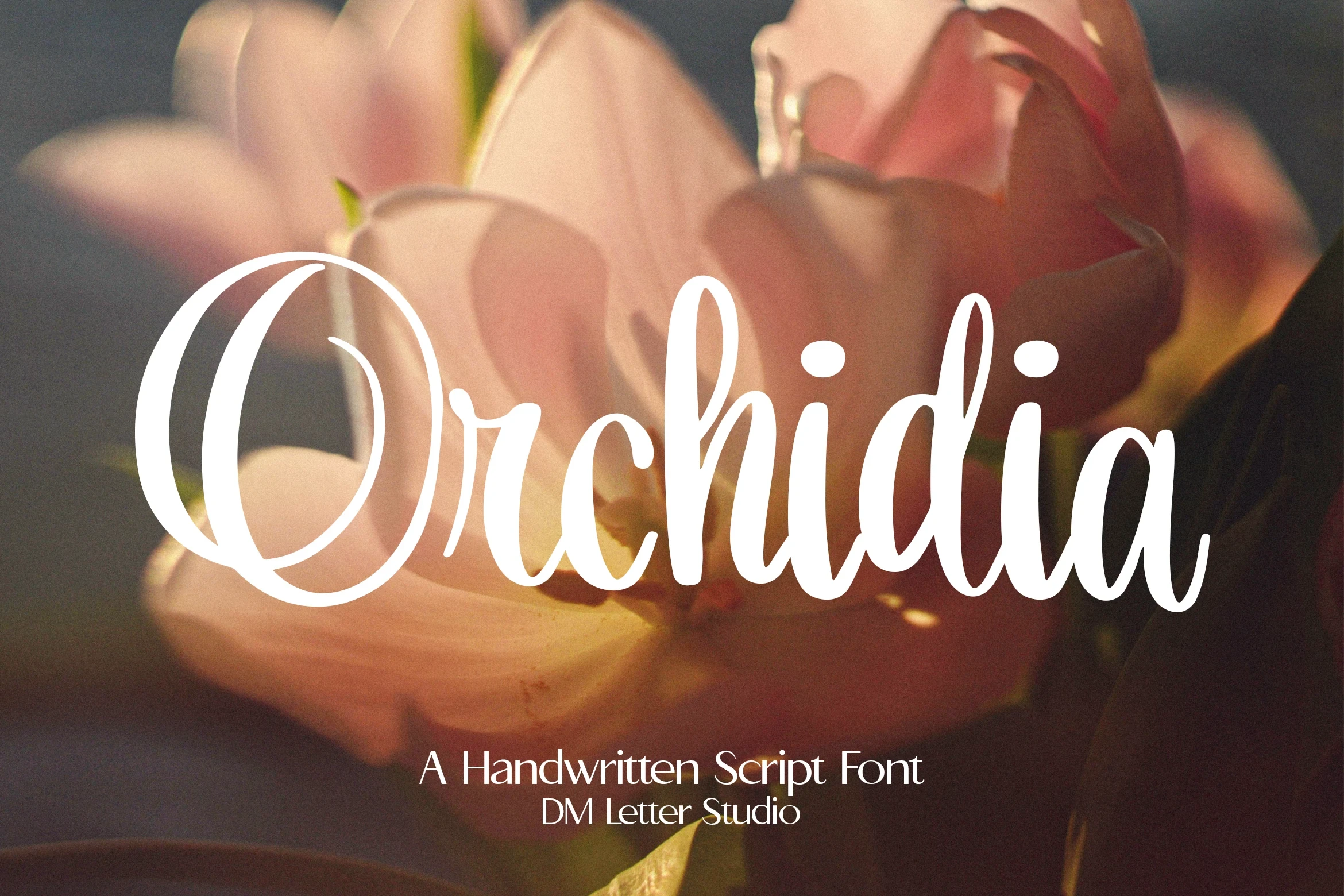
Best For: product labels, logos, branding, packaging
Orchidia Font stands apart with high stroke contrast, an upright stance, and a circular swashed initial O. Among Signature Handwritten Fonts, its interconnected lowercase is most readable at large display sizes, while the paired sans-serif can handle small supporting text.
How to Choose the Right Font
Choose lighter connected styles when you need contemporary names, invitations, or compact branding, and move to stronger display scripts when stroke rhythm or distinctive shapes should dominate. For Signature Handwritten Fonts with swashes, ligatures, contrast, or a marked slant, test the exact wording at final size and pair small supporting information with a clearer sans-serif.